


Ford Transit Vans Models and Trims Breakdown
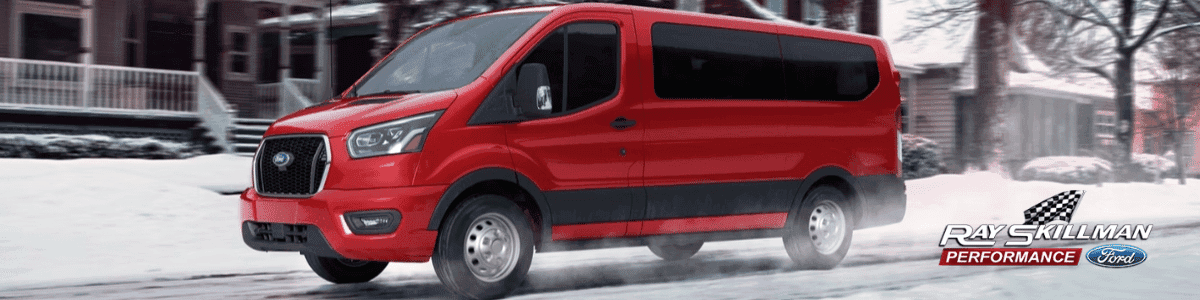
A Van Lineup that Means Business
The Ford Transit Vans models and trims span three separate configurations in 2026. Buyers pick from the Cargo Van, the Passenger Van, and the all-electric E-Transit. Add in multiple roof heights, two wheelbases, and a choice of V6 engines, and the Transit offers hundreds of ways to spec a van. This guide walks through what sits under each trim name so you can match the right one to the job ahead.
- Cargo Van buyers pick between T-150, T-250, T-350, and T-350 HD designations tied to payload capacity.
- Passenger Van shoppers choose between XL and XLT trims, with room for up to 15 people.
- Both the 3.5L PFDi V6 and 3.5L EcoBoost V6 pair with a 10-speed automatic transmission.
What’s New for the 2026 Lineup
Ford refreshed the digital side of the Transit for 2026 without changing the mechanical formula. An 8-inch driver cluster display pairs with a 12-inch SYNC 4 touchscreen across the lineup, and wireless Apple CarPlay plus Android Auto come standard. A 5G modem powers a Wi-Fi hotspot for up to 10 devices, and the new Ford Connectivity Package adds an unlimited data plan, voice assistant, karaoke, and YouTube streaming while parked, all included for the first year.
Outside, you’ll spot fresh badges, redesigned rear taillights, and new paint options. The chassis is pre-wired for upfit integration, which matters a lot if you’re adding shelving or specialty equipment once the van arrives on your lot. Pro Trailer Backup Assist and adaptive cruise control with lane centering now reach more trims as well.
Ford Transit Vans Cargo Lineup
Ford organizes the Cargo Van lineup by weight rating, and the range covers most trade needs. T-150 sits at the entry point and works well for tradespeople running lighter loads. Step up to T-250 for mid-duty hauling, or T-350 for higher gross weight ratings. At the top of the range, T-350 HD adds dual-rear-wheel capability and tops out at 5,103 lbs of payload on the High Roof, Extended Length setup with rear-wheel drive.
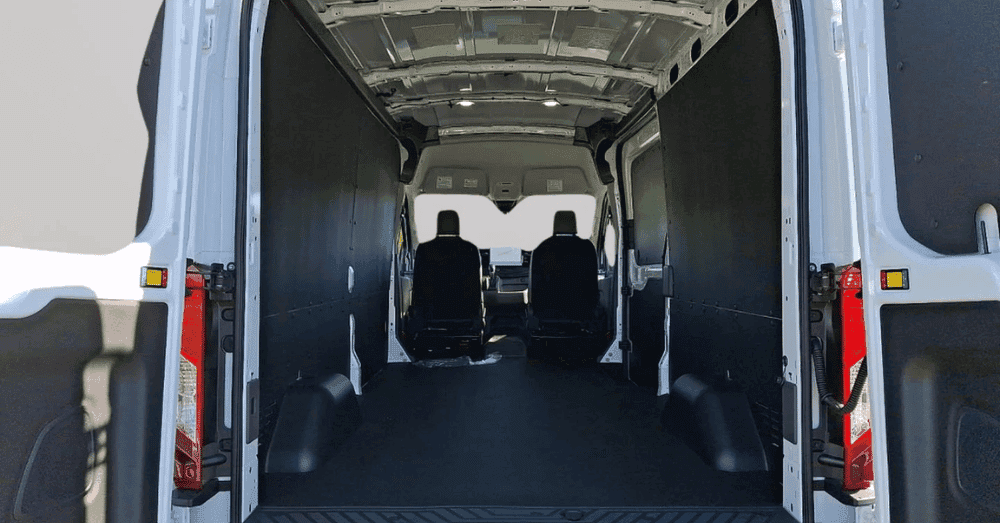
Every Cargo Van can be spec’d with three roof heights. The Low Roof measures roughly 82 inches tall outside, friendly for parking garages. Medium Roof jumps to about 100 inches and lets most adults stand inside. High Roof hits 110 inches with up to 81.5 inches of interior standing space for folks who work inside the van all day. Cargo Van body lengths run from a 130-inch wheelbase regular length up through 148-inch Extended, which offers 487.3 cu ft of cargo volume behind the first row.
Passenger Van XL and XLT
The Passenger Van comes in two trims. XL arrives with SYNC 4, front and side airbags with curtain coverage for every row, push-button start, and Ford Co-Pilot360 safety tech. Co-Pilot360 covers pre-collision assist with automatic emergency braking, lane-keeping, auto high beams, and a rearview camera. Dark Palazzo Gray vinyl seats are standard, and you can configure the cabin for 2, 12, or 15 passengers.
XLT adds more gear for shuttle and livery operators. Carpet replaces vinyl flooring, and the trim picks up Blind Spot Information System (BLIS) with Cross-Traffic Alert and Trailer Coverage, plus Reverse Sensing System. A chrome grille, wiper-activated headlamps, and available 10-way power heated front seats round out the upgrade. Livery outfits can add a dedicated package with leather upholstery and privacy glass for a more upscale cabin feel.
The E-Transit Electric Option
Fleets looking to cut fuel costs can skip the V6 engines and go with the E-Transit. It runs a single-motor rear-wheel-drive setup with around 266 hp and an EPA-estimated 159 miles of range on the extended-range battery. Maximum payload lands near 3,311 lbs, and Ford covers the battery with an 8-year/100,000-mile warranty. Low, medium, and high roof setups are available, along with an extended-length body. Rear-wheel drive is the only driveline on the electric model.
| Model / Trim | Powertrain | Seating / Payload | Highlights |
|---|---|---|---|
| Transit T-150 Cargo | 3.5L V6 (275 hp) or 3.5L EcoBoost V6 (300 hp), 10-speed auto, RWD or AWD | 2 seats Light-duty payload |
Entry-level Cargo Van, 3 roof heights, 2 wheelbases |
| Transit T-250 Cargo | Same V6 options, 10-speed auto, RWD or AWD | 2 seats Mid-duty payload |
Most popular fleet pick, balanced payload and size |
| Transit T-350 Cargo | Same V6 options, 10-speed auto, RWD or AWD | 2 seats Heavier GVWR |
Extended lengths available, dual rear wheel option |
| Transit T-350 HD Cargo | 3.5L EcoBoost V6 (300 hp), 10-speed auto, RWD or AWD, DRW available | 2 seats Up to 5,103 lbs payload |
Top-tier capability, up to 11,000 lbs GVWR |
| Passenger Van XL | 3.5L V6 or 3.5L EcoBoost V6, 10-speed auto, RWD or AWD | Up to 15 seats Up to 3,401 lbs payload |
SYNC 4, Ford Co-Pilot360, vinyl seats, push-button start |
| Passenger Van XLT | 3.5L V6 or 3.5L EcoBoost V6, 10-speed auto, RWD or AWD | Up to 15 seats Up to 3,401 lbs payload |
Adds BLIS, Reverse Sensing, carpet, chrome grille, heated front seats |
| E-Transit | Single-motor EV, around 266 hp, single-speed, RWD only | 2 seats (Cargo) Around 3,311 lbs payload |
Around 159-mile EPA range, 8-yr/100k-mile battery warranty |
Picking the Right Transit for Your Work
Plumbers, electricians, and small delivery operators usually land on the T-250 Medium Roof with the 148-inch wheelbase, which hits a sweet spot of cargo room and maneuverability on city streets. Bigger trade outfits hauling heavier gear should look at the T-350 or T-350 HD with the EcoBoost engine, especially if towing up to 4,500 lbs with the Heavy-Duty Trailer Tow Package is part of the weekly routine.
Shuttle drivers, church groups, and event transport operators benefit from the Passenger Van XLT, where the added safety tech and heated front seats pay off over long routes. Fleet managers tracking fuel spend have a reason to run the numbers on the E-Transit, particularly for urban routes under 150 miles per shift. Adding Intelligent AWD across any gas trim runs roughly $4,000 to $4,700 but earns its keep on snowy Indiana mornings when traction matters.
Test Drive a 2026 Transit at Ray Skillman Ford
Finding the right Transit setup for your business means walking through configurations with someone who knows the lineup. We carry 2026 Transit Cargo Vans and Passenger Vans at our Greenwood store, with both the 3.5L PFDi V6 and available EcoBoost on hand. Our sales team works with trade shops, shuttle operators, and business owners across the Indianapolis area every week, so we can help you figure out whether the T-250 Medium Roof fits your routes or if the Passenger Van XLT makes more sense for your crew. We also handle fleet ordering, upfit coordination, and service after the sale through our Ford-certified shop. Stop by or browse our current Transit inventory online to see what’s ready to drive home this week.
Frequently Asked Questions
How many passengers can the 2026 Ford Transit Passenger Van hold?
The Passenger Van can be configured to carry 2, 12, or 15 passengers, depending on how you spec the rear rows. Both XL and XLT trims offer the same seating range, so the choice between them comes down to features and driver comfort rather than capacity. Fleet buyers running shuttles and church vans usually go with the 15-passenger layout, while conversion builders tend to stick with the 2-seat Cargo Van as a starting point.
What’s the difference between the T-150, T-250, and T-350?
Those numbers refer to payload capacity and gross vehicle weight rating. T-150 handles lighter work for tradespeople hauling tools or smaller parcels. T-250 fits most mid-duty fleet needs and happens to be the most popular pick nationwide. T-350 steps up to heavier loads, and T-350 HD tops the Cargo Van range with up to 5,103 lbs of payload and dual-rear-wheel availability.
Does the 2026 Ford Transit come with all-wheel drive?
Intelligent AWD is available on every gas-powered Transit, across both Cargo and Passenger configurations. Ford built the system so it doesn’t raise the load floor or seat height, which matters a lot for shelving and upfits. Selectable drive modes adjust the van’s behavior for different conditions. The E-Transit electric model is rear-wheel drive only.
How much can the Ford Transit tow?
Properly equipped with the Heavy-Duty Trailer Tow Package, the Transit can tow up to 4,500 lbs. That package bundles wiring provisions, a frame-mounted hitch receiver, and rear jumpers. Actual towing numbers shift depending on which engine, roof height, and length combination you choose, so the EcoBoost on a longer wheelbase generally works best for crews towing regularly.
What’s the driving range on the E-Transit?
Ford’s EPA-estimated range for the 2026 E-Transit lands at around 159 miles on the extended-range battery. The battery carries an 8-year or 100,000-mile warranty, whichever comes first. Low, medium, and high roof options are all on the menu, and fleets running urban routes under 150 miles per shift tend to see the strongest return on the electric model.
Is the 2026 Ford Transit a good fit for small business owners?
It’s built for exactly that kind of buyer. The Cargo Van supports factory-installed trade packages for electricians, plumbers, HVAC techs, and courier operations, with shelving, bins, and partitions ready to go. The 5G Wi-Fi hotspot and Ford Telematics let the van double as a mobile office on job sites. Add in Ford Pro service support, and even a one-van operation gets fleet-grade backup.
0 comment(s) so far on Ford Transit Vans Models and Trims Breakdown